
Inside Suntory’s Swanbank beverage production and energy systems
Suntory’s Swanbank project combines beverage packaging, automated warehousing and renewable heat, followed by a Brisbane catchment water programme.
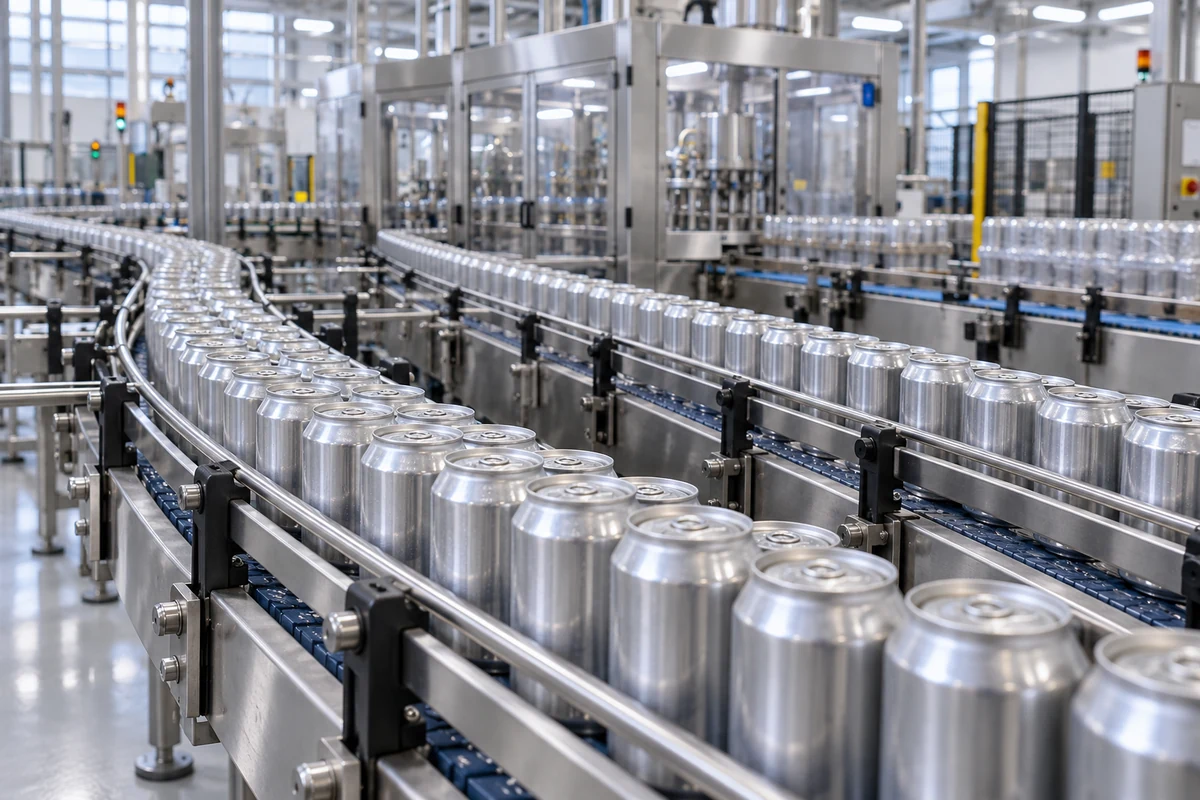
A beverage site in Ipswich
Suntory’s Swanbank facility in Ipswich, Queensland, brings beverage manufacturing, packaging, storage and distribution onto one site in Australia. The project formed part of the creation of Suntory Oceania, the partnership between Suntory Global Spirits and Suntory Beverage & Food. In May 2024, the business was installing 7,000 solar panels as part of an approximately AU$400 million manufacturing investment. The partnership itself was described as an AU$3 billion multi-beverage business spanning Australia and New Zealand. Its manufacturing investment and the size attached to the combined business were separate figures. The planned operating model covered manufacturing, sales and distribution across an alcoholic and non-alcoholic portfolio. Mark Hill, managing director for Oceania at Suntory Global Spirits, associated the investment with the group’s confidence in the Australian market and its plans to grow there.
The site progressed through several dated stages. The May 2024 plans included a biomass boiler using local sawmill offcuts, an Organic Rankine Cycle generator and a solar installation whose panels would extend about 14 kilometres if placed end to end. The biomass project was completed in August 2024, the date listed in its Australian Renewable Heat Awards entry. The facility’s opening ceremony took place in Ipswich on Jul 7, 2025. Its start-up capacity was approximately 20 million beverage cases annually, while later packaging coverage described a possible expansion to 50 million cases as demand developed. That higher figure was an expansion plan. The 17-hectare location accommodated both production and the distribution infrastructure associated with the new business. In May 2026, Suntory added a catchment restoration programme linked to the facility’s annual water use.

Packaging across cans, glass and kegs
The Swanbank packaging configuration includes two high-speed canning lines, a multi-format glass bottling line supplied by Krones and a kegging line from KHS. Three depalletisers fed the packaging operation at the July 2025 opening. The glass line accommodated five bottle formats, and its depalletising-to-dispatch sequence could take 25 minutes. Case packing occurred every two seconds. Automated, rapid changeovers supported up to 60 stock-keeping units. These were specifications attached to the packaging operation at opening. They covered container handling and packing as well as filling. The business’s wider product portfolio included ready-to-drink alcoholic beverages, energy drinks, soft drinks, juice, water and coffee. The presence of premium spirits brands within that portfolio did not turn the Queensland packaging site into a distillery for all of those brands.
The filling equipment connects with finished-goods handling rather than ending at the sealed container. A 30-metre-high automated storage and retrieval system handled packed products at the site. Suntory’s chief supply chain officer Ian Roberts associated the facility with local production, responsiveness to demand and the company’s sustainability plans. In the earlier May 2024 announcement, he had also linked the investment to innovation and the ability to manufacture, sell and distribute the portfolio through an integrated regional operation. The later warehouse architecture gave the project a specific physical arrangement: packed product could enter automated storage and subsequently move toward dispatch. Packaging format, warehouse storage and truck movements were therefore all part of the Swanbank project’s documented equipment and operating scope. The stated annual case capacity described the plant’s production capability, rather than a published count of completed shipments.
Solar electricity, biomass heat and recovery
The energy design combined several systems with different duties. Solar panels generated electricity at the site. A biomass hot-water boiler supplied process heat, while Organic Rankine Cycle equipment recovered heat for electricity generation. A power purchase agreement with Queensland’s CleanCo covered the electricity shortfall. The engineering firm Beca described evaluating heat pumps, electrode boilers and biomass boilers after considering reductions in energy demand. Its selected arrangement used biomass hot water with Organic Rankine Cycle generation. Beca also identified a centrifugal chiller and optimised refrigeration controls among the project’s heating and cooling solutions. The project description associated the hot-water approach with avoiding steam-trap losses and the chemical treatment associated with the alternative steam arrangement. No overall energy-efficiency percentage was supplied for the complete factory.
The biomass project’s award entry supplied further equipment detail. Justsen Energiteknik supplied a hot-water boiler with a stated pressure of 10 bar and temperature of 150°C. Australian Biomass supplied the wood chips. The project entry identified Forest Management Systems AS4708-2023 and Chain of Custody of Forest Products AS4707-2024 as the relevant fuel-sourcing standards. Two Organic Rankine Cycle turbines were supplied by g-tet Thermal Energy. Their stated duty involved converting up to 2 MW of waste heat into electricity; that thermal input figure was not the turbines’ electrical output rating. The entry described using the electricity at the plant or exporting it through the CleanCo arrangement. It also associated the turbines with maintaining a stable biomass feed rate while accommodating the beverage operation’s heat requirement. These specifications came from the submitted project account published by the award organiser.

Operational boundaries and employment
Beca’s project description applied the facility’s carbon-neutral claim to Scope 1 and Scope 2 emissions. It connected the on-site heat and generation systems with the renewable-electricity purchase agreement. The Australian Renewable Heat Awards recognised the biomass project in 2024, with the organiser publishing its winning entry in October. That entry described carbon neutrality under the relevant programme as a 2025 objective. The dated objective and the later operational description therefore belong to different stages of the project. Neither statement supplied a complete product life-cycle footprint for every beverage sold by the regional business. The published technical account concentrated on the facility’s energy supply, heat recovery and operation. Fuel certification, electricity contracting and equipment performance each had their own documented role within that account.
The workforce figures also had distinct dates and boundaries. In May 2024, the project had created approximately 450 construction and installation jobs, with 160 long-term local positions expected once the facility became operational. Suntory was also recruiting more than 130 positions for an Australian alcohol licensed route-to-market function scheduled to launch in mid-2025. Those commercial roles were a separate recruitment programme from the site’s permanent operating positions. By the July 2025 opening, more than 2,000 people had contributed to the development since its announcement in 2022, and over 400 staff had joined across commercial, sales and supply-chain operations. These later figures covered a broader development and business transformation. The workforce totals did not represent a single headcount survey conducted at the factory on the same date.
The digital production platform
The physical systems were connected to an enterprise platform delivered by DXC Technology. Its 2026 customer case study identified SAP S/4HANA as the core, extended with Extended Warehouse Management, the Process Industries production-planning component, Quality Management and Plant Maintenance. The documented architecture covered manufacturing, warehousing, planning and customer operations. These applications connected with operational technology inside the facility, including automated pallet transport, line-management systems, batching equipment and automated storage. DXC described the platform as supporting a shift from discrete to process manufacturing. Its account concerned the configuration and integration delivered for Suntory; statements about improved accuracy, scalability and service were the supplier’s assessment of that work. The technical design was described alongside the business’s July 2025 launch.
Ingredient staging and finished-product handling used different connections within that architecture. DXC identified SAP Business Technology Platform and Cloud Integration middleware in the connection between batching and warehouse management. The batching integration staged and consumed ingredients for syrup preparation. The line-management system posted newly completed pallets into Extended Warehouse Management as they left production. The system also supported opportunistic cross-docking, allowing finished pallets to move toward outbound trucks directly from production. Excise-related configuration for Australian bonded alcohol was included from go-live. The supplier’s named applications and interfaces establish which business and equipment functions were connected. They do not supply a recipe, a production formula or a published comparison of the cost of making individual drinks. The case study’s process description covers movement of ingredients, records and finished goods.
Warehouse movements and commissioning
The automated storage and retrieval system had capacity for more than 30,000 pallets in DXC’s technical account. Fifteen material-flow-system interfaces handled put-away, picking, replenishment and stock reconciliation. At the production end, roll-on/roll-off dock automation enabled warehouse management to direct shuttle cars to the appropriate production line. The line-management system created a warehouse record for the new pallet as it left production. Extended Warehouse Management then coordinated the handling equipment, while the material-flow connections managed storage and retrieval movements. The same technical account identified direct outbound cross-docking as an available handling path for finished goods. Its storage capacity referred to pallets held within the automated system. Annual beverage case capacity and the number of software interfaces remained separate specifications of the wider operation.
DXC structured delivery in three phases aligned with physical commissioning. The enterprise implementation ran alongside construction so that the digital platform would be ready as production equipment came online. Digital, operations, supply-chain and engineering teams collaborated on the implementation. The business’s resulting systems covered the following functions:

- Production planning and process-industry manufacturing within the SAP core.
- Ingredient staging and consumption records for syrup preparation.
- Quality management and plant maintenance within the application architecture.
- Warehouse records linked to automated storage, shuttle cars and pallet movement.
- Posting of completed production pallets from line-management systems.
- Cross-docking and outbound handling of finished goods.
- Excise-related configuration for the Australian bonded-alcohol operation.
Water programmes in the Brisbane catchment
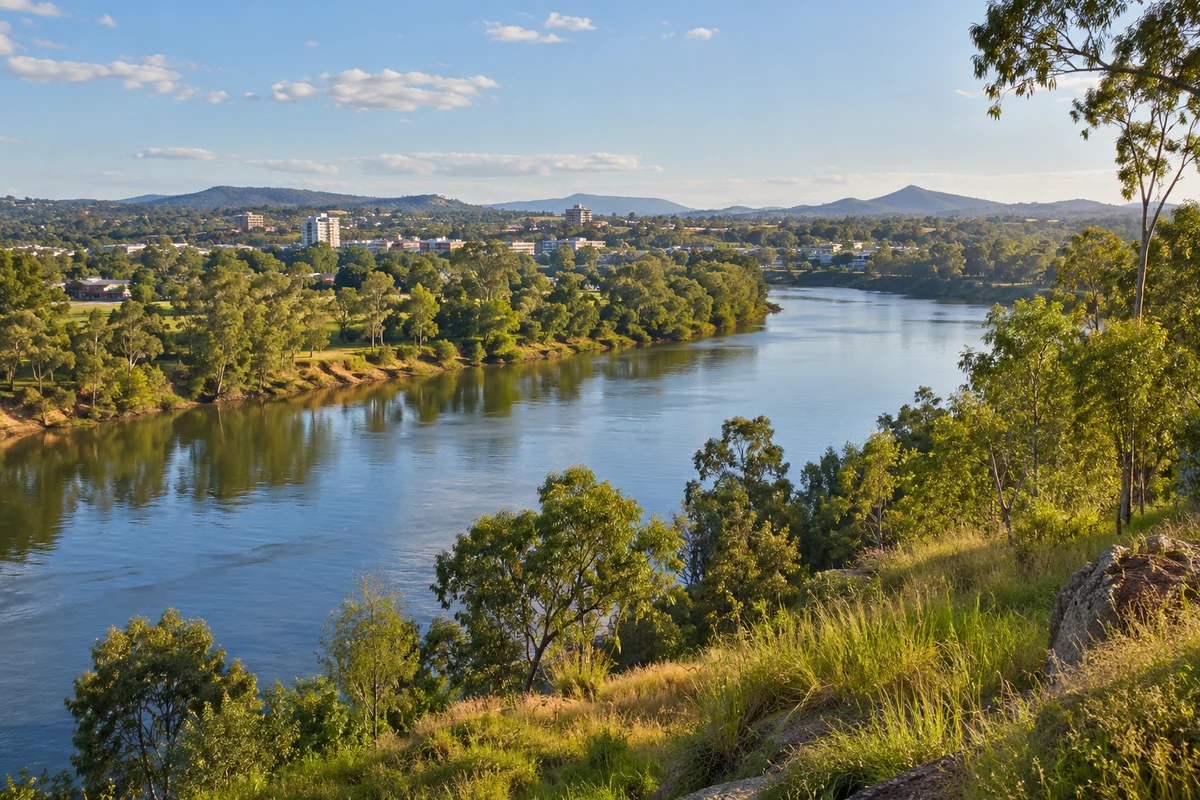
On May 14, 2026, Suntory announced a water-replenishment programme in the Brisbane River catchment. The goal was to replenish more water than the Swanbank facility used annually. Planned local activities included restoration of waterways, planting along riverbanks, changes to irrigation and crop rotations. Suntory associated the catchment with the facility’s location and described collaboration with local communities. The announcement followed the Australian launch of its Mizuiku nature-and-water education programme in 2025. The replenishment objective concerned the surrounding water system and the factory’s annual use. It was a stated programme goal, with practical projects beginning in May 2026. The announcement did not publish an independently measured annual replenishment total for the new Australian activities, or a completed comparison showing that the objective had already been met.
A three-year research partnership with Griffith University’s Australian Rivers Institute accompanied the local programme. Its research scope covered the effect of climate change on water quantity and quality. The collaboration would connect field evidence from the replenishment work with ecohydrological science and modelling of water flows. The partnership aimed to apply its findings to water management and restoration, under the programme in Suntory’s May 2026 announcement. The group’s wider environmental vision included reducing production water intensity at owned plants by 50% against a 2015 baseline and replenishing more than all water used at its owned plants globally. Those were global objectives. The Swanbank initiative applied a local annual-use goal, while the university partnership addressed research into the catchment’s water systems over its agreed three-year period.

A regional manufacturing and distribution network
Suntory Oceania’s regional organisation had more than 1,500 employees, two manufacturing sites and five distribution centres in the company’s May 2026 description. Its portfolio included more than 40 brands across alcoholic and non-alcoholic beverages. The Swanbank plant was one part of this network, alongside the group’s existing production and distribution activities. The two-company partnership linked Suntory Global Spirits with Suntory Beverage & Food, within the wider group founded in Osaka, Japan, in 1899. The regional scale figures described the combined Oceania organisation. The plant’s 17-hectare site, case capacity and automated warehouse were site-level specifications. Keeping those scopes explicit preserves the distinction between the local investment and the business that sold and distributed its output across the region.
In an August 2026 interview with Drinks Trade, chief supply chain officer Ian Roberts described combining alcoholic and non-alcoholic production as part of the business’s approach to bringing new products to market. The interview identified 70 alcoholic-beverage stock-keeping units transferred to Swanbank and two canning lines with a combined rate of 180,000 cans per hour. It also gave cumulative facility output of more than 252 million cans and bottles in its first year. Those were company-reported operating figures in the interview. The hourly filling rate covered the canning lines, while the cumulative container count included both cans and bottles. Neither figure was converted into annual cases. The interview’s reported 36% increase in production lacked an explicit comparison denominator, so it does not establish an independently calculated year-on-year growth rate for the individual factory.

Connecting trade customers with production
A November 2025 partner-content account in iTnews described a three-year, AU$30 million digital transformation spanning the business’s production, warehousing, sales and customer engagement. The commercial end included a customer-relationship-management platform connected to telephony and sales-force automation for a licensed sales team of about 200 people. The online store was rebuilt for an expanded alcoholic portfolio with licence verification. The same account identified SAP Integrated Business Planning in demand sensing, supplier ordering and production scheduling, and SAP’s universal journal within the financial architecture. These were descriptions of the company’s implementation in promotional partner material, rather than independent tests of customer service or operating savings. They extend the documented system scope beyond the machinery and warehouse interfaces to the commercial teams receiving and processing trade orders.
The digital accounts cover successive stages of that implementation. The November 2025 partner material described 34 interfaces across SAP, warehouse management and operational technology; DXC’s 2026 technical study specified 15 material-flow interfaces within the automated storage system. The figures cover different connection sets. DXC subsequently identified data and planning as areas for further work, with Suntory’s digital leadership looking toward demand sensing and integration of data and artificial intelligence into planning. These were development intentions. The commissioned platform already linked production records, ingredient staging, automated pallet movements and outbound handling, while the broader commercial configuration connected customer service and licensed sales. Its published architecture combined a production core, warehouse-management applications, operational equipment and trade-facing systems across the regional business.
Leave a comment