
Cambodia’s rubber trade: growing product exports and lower natural-rubber receipts
Cambodia’s rubber and rubber-product exports passed US$2 billion in 2025, while natural-rubber receipts declined, according to separate government trade totals.
Two export measures moved in different directions
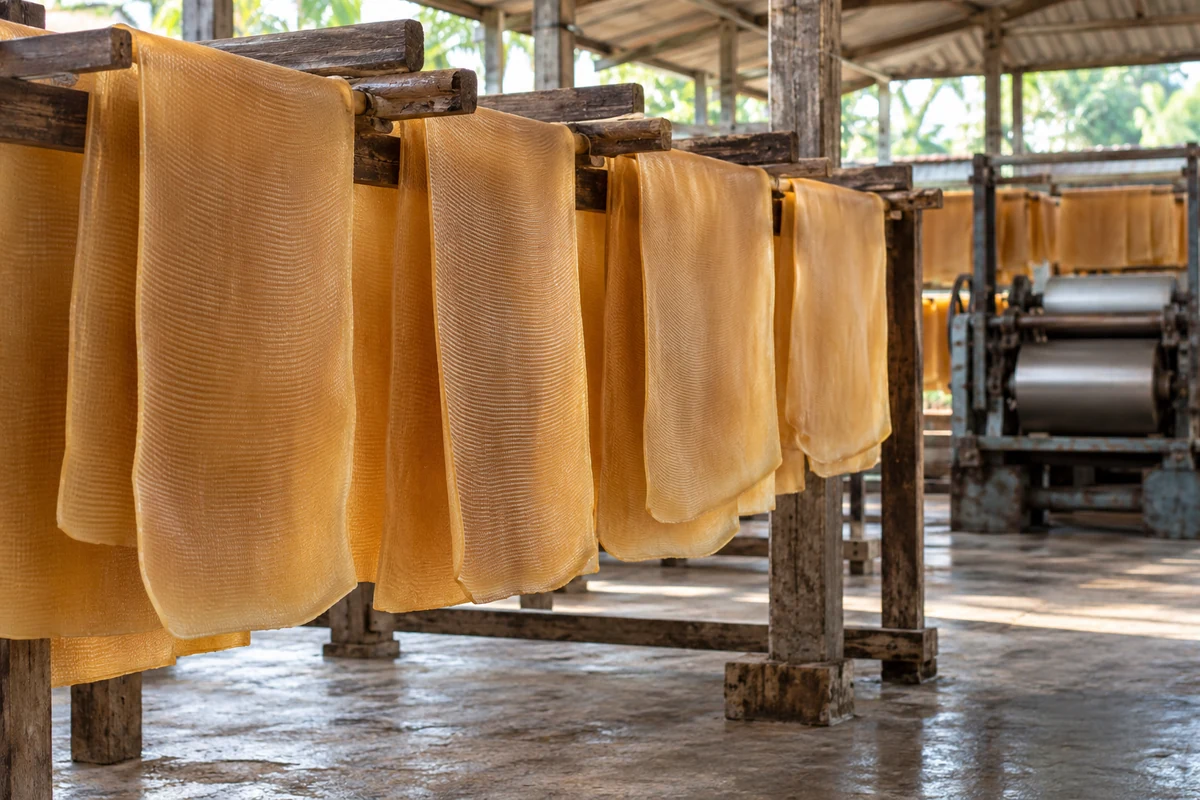
Cambodia’s exports of rubber and rubber products passed US$2 billion in 2025, increasing by almost 37% compared with 2024. The broader export category crossed RM8 billion in the figures attributed to the country’s General Department of Customs and Excise. The annual total covers rubber together with manufactured rubber products, including the downstream trade discussed alongside plantation activity.
Natural-rubber exports, measured separately, generated approximately US$604 million, or RM2.4 billion, in 2025. That was a decline of 9% from the previous year, according to the General Directorate of Rubber. The natural-rubber figure covers a narrower category than the combined rubber-and-rubber-products total. Cambodia therefore recorded growth in the broader trade category alongside lower receipts from natural-rubber exports. The two sets of results retain their respective product coverage and year-on-year comparisons.

Plantation activity and downstream markets
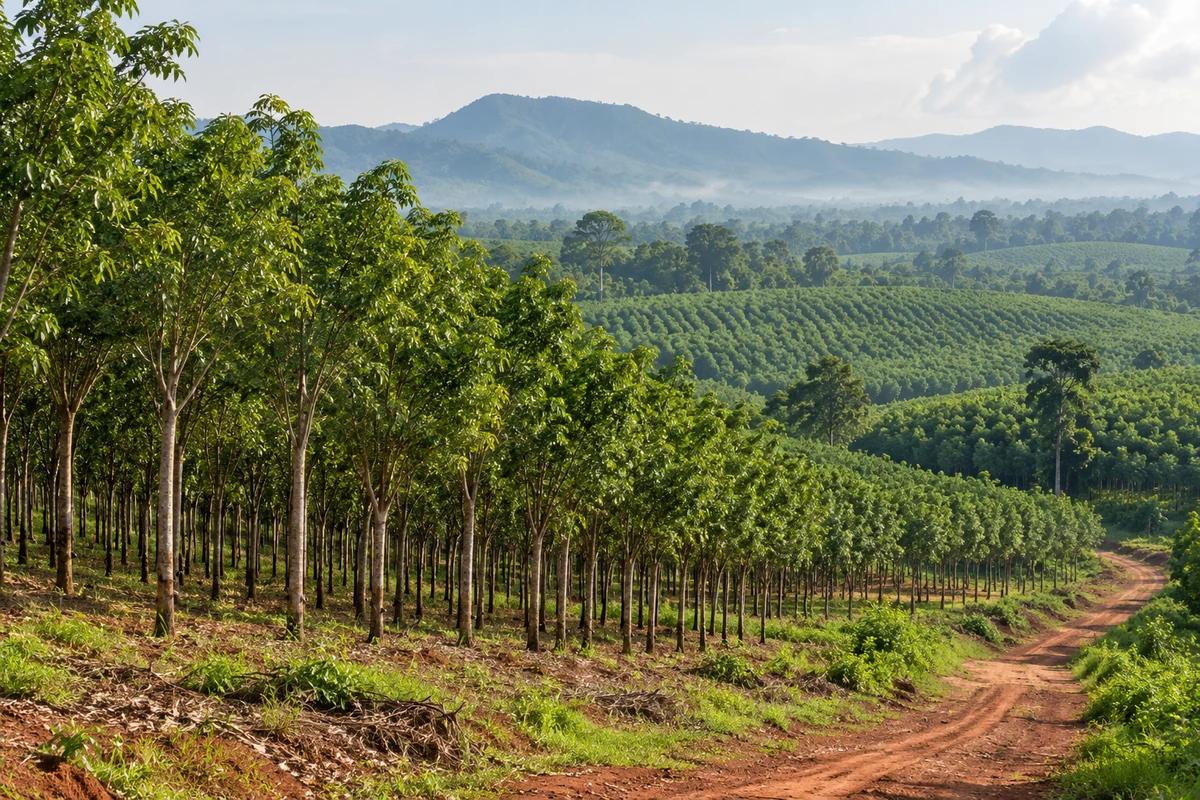
About 448,000 hectares in Cambodia are devoted to rubber planting. Multi Venture Plantation chief executive Sebastian George attributed the industry’s recent production growth to an expansion in productive plantation areas, improved agronomic practices and supportive market conditions. He also pointed to stronger global rubber prices and rising demand from domestic tyre manufacturing.
Cambodian rubber reaches buyers in China, Malaysia, Singapore and Vietnam. Manufacturers use the commodity in several downstream product groups, linking plantation output with industrial demand across the region. The applications include:
- Tyres for the automotive industry.
- Medical gloves.
- Footwear.
- Other consumer products made with rubber.
Regional competition and the supply outlook
Cambodia operates in a Southeast Asian industry with established producers including Thailand, Indonesia, Malaysia and Vietnam. The Association of Natural Rubber Producing Countries estimated Thailand’s output at about five million metric tonnes in 2025, Indonesia’s at two million and Vietnam’s at 1.3 million. George described Cambodia as smaller than the major regional producers, while identifying proximity to important markets, improving quality and cost-efficient production as its competitive strengths.
The Association of Natural Rubber Producing Countries identified a supply-demand gap and continuing demand from the automotive industry as factors that could put upward pressure on natural-rubber prices. Its outlook remained conditional on market developments. The Malaysian Rubber Board’s December digest also identified potential supply constraints, including limited new planting, crop diversification in Indonesia and disruption associated with flooding in southern Thailand and the Thai–Cambodia conflict.
Leave a comment